
A product with no design foundation
Screenloop is an early-stage startup building interview intelligence tooling, with ambitions to become a full Talent Operations Platform. Small engineering team, one designer, no design in the process.
No design system. No research practice. No product strategy or vision. Product decisions happened in engineering sprints without design input.
Lead design strategy, execution and nurture the team around it.
- Assess the brand, product and tech stack. Understand the gap before designing anything.
- Improve design presence and integration in team meetings and product decisions
- Plan and execute an incremental redesign focused on quality and usability
- Implement a UX research practice and product discovery process
- Build and document the Screenloop design system
- Increase collaboration between product, engineering, customer success and sales
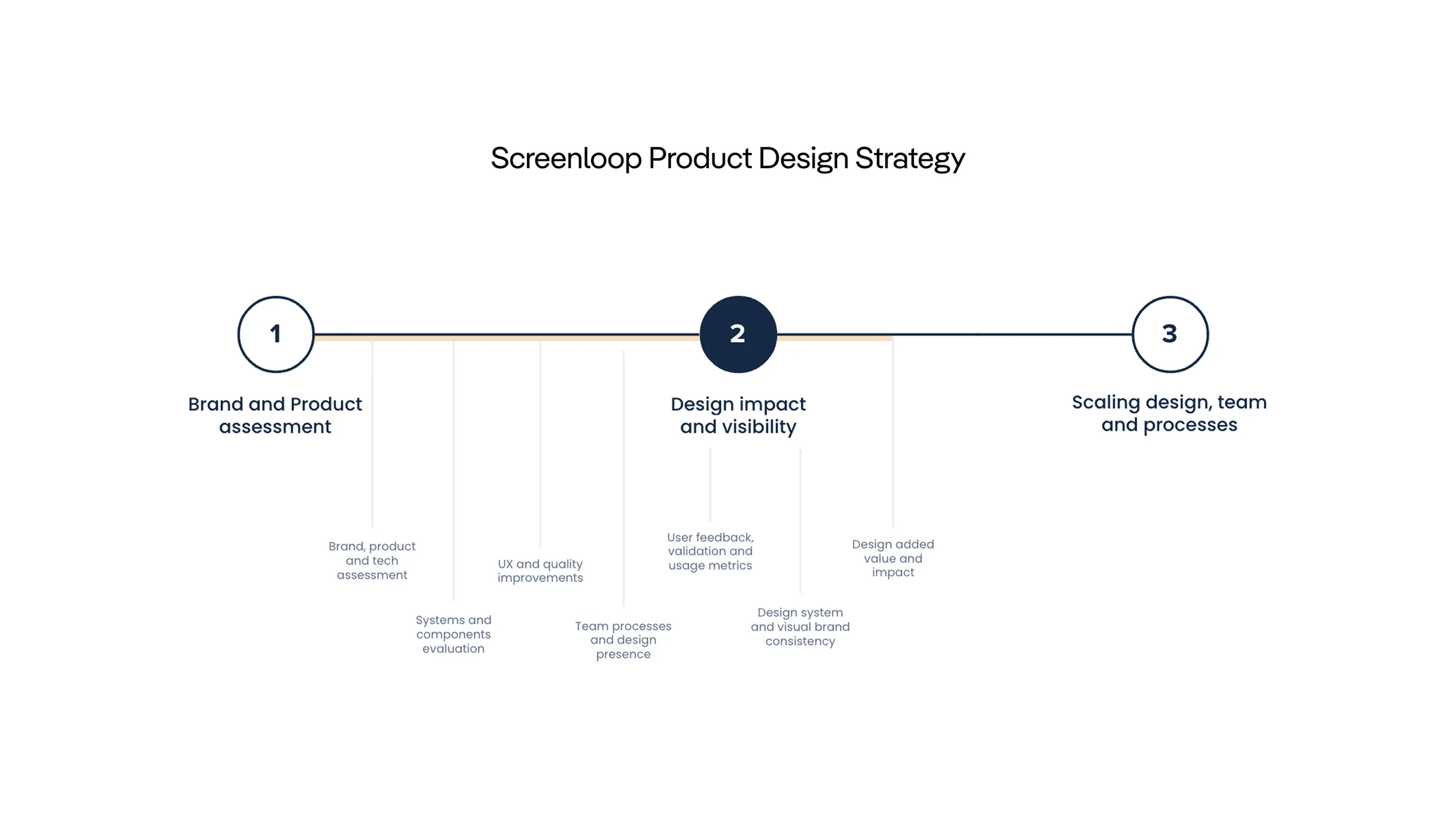
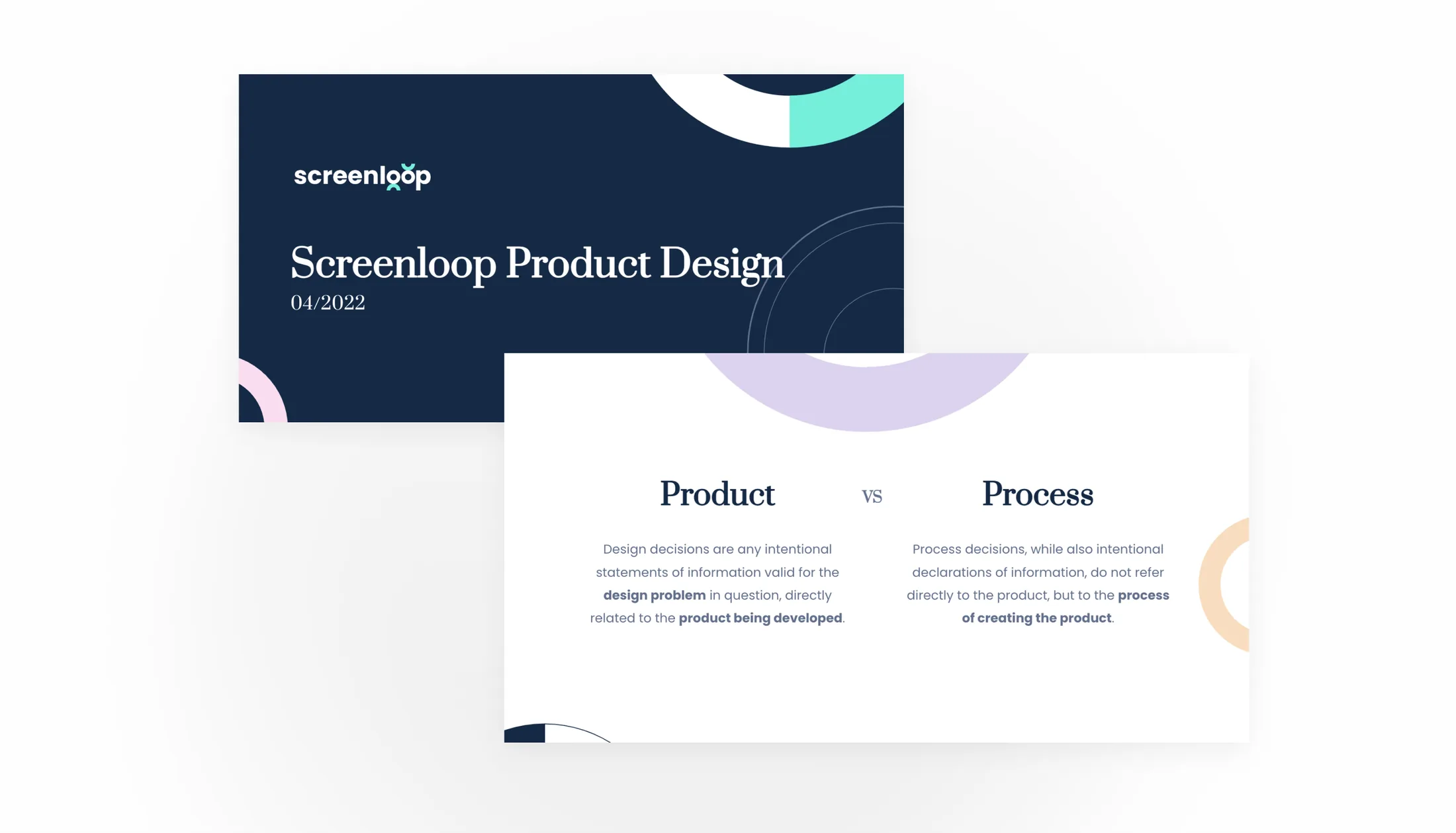
The design strategy
Three months in conversations with customers, the product team, engineers and the data. Talent acquisition teams were not struggling with software. They were struggling with coordination.
That framing changed everything. We were not redesigning a recruiter tool. We were designing a coordination layer for hiring pipelines.
One platform, one architecture
Interview Intelligence, scorecards, pipeline management, reporting, smart scheduling and the ATS. Six surfaces, three engineering teams, two user types, and users rebuilding their mental model every time they moved between them.

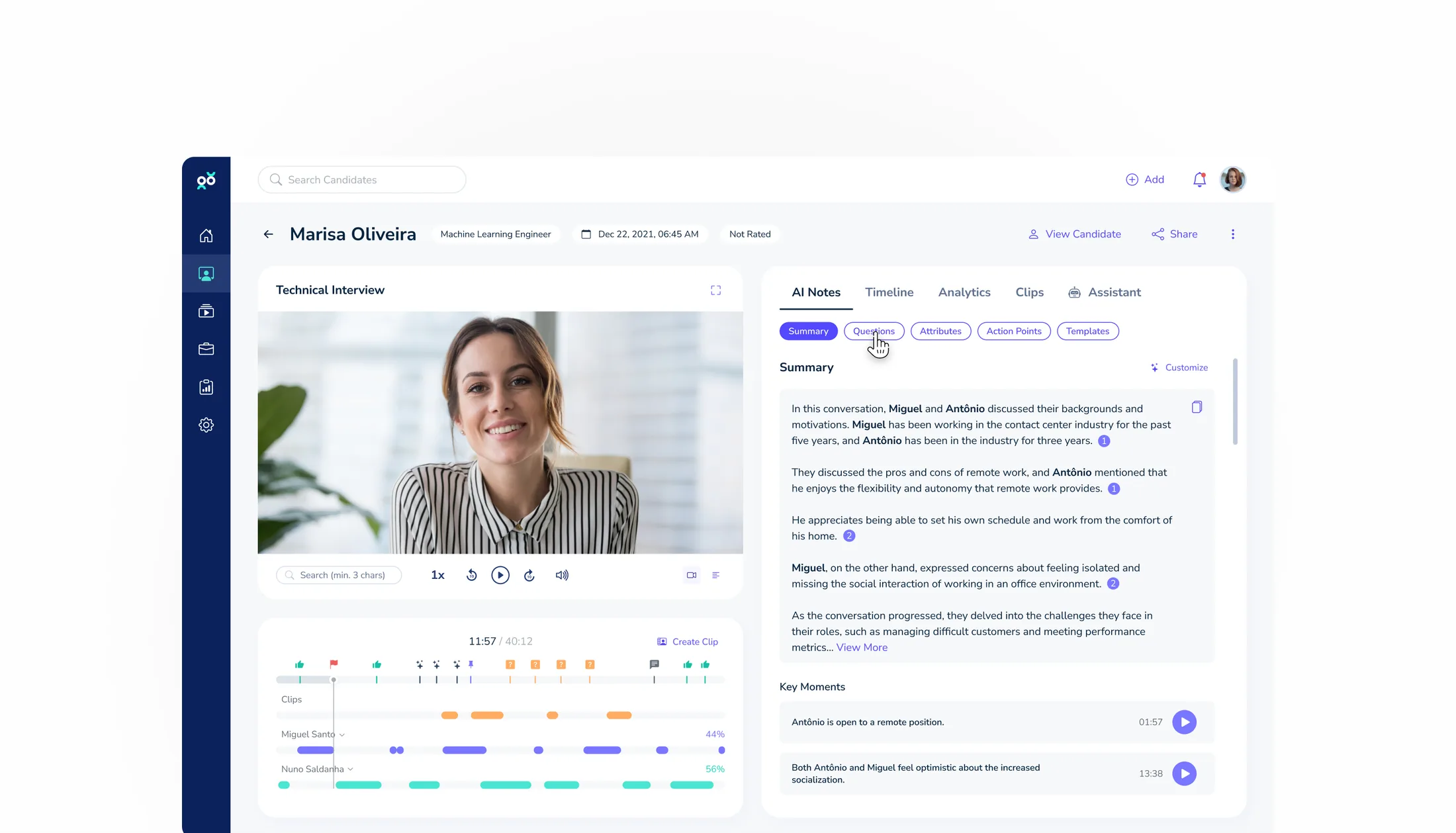
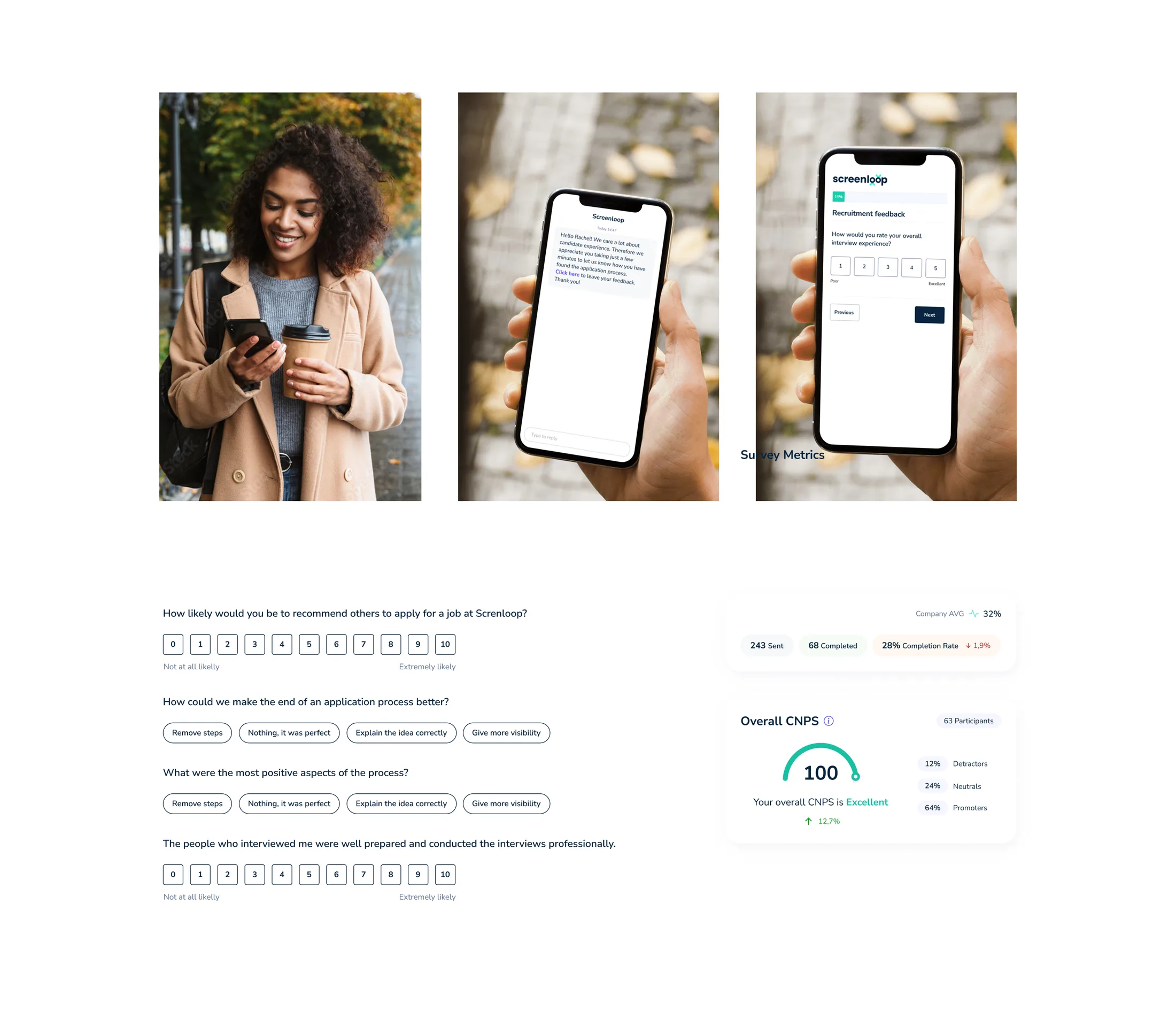
Six products, one coherent system
The design system came first. A constraint on everything else, not a side project. Every new feature was an opportunity to extend the system. Within 18 months we had a live, documented system engineering referenced daily.

Three calls that shaped the outcome
Design system before delivery speed
It slowed us down early. It's why six products still feel like one, and why we got faster later, not slower.
Research as a product input, not a UX ritual
Every cycle tied to a decision on the table. No research theatre.
Shipped six-plus products, ATS and Talent Ops platform
Breadth was the strategy, not a side effect. One platform, not six separate bets.
Results that moved the business
Created, measured and managed 400+ design and research tasks, 39% ATS-related. Usage and adoption data from July 2023 to June 2024, following the launch of the next-gen Talent Operations Platform.
What this changed
Same decision, same system, translated into the language of the person who had to fund it.
Putting the design system first was right. Making the case in design language was not. Consistency, quality and reuse were not problems a seed-stage company felt yet, and for two quarters design was the reason things shipped slower.
What funded it was the same argument reframed around a cost the CEO was already paying: engineering time lost rebuilding the same patterns on every surface. I arrived at his language two quarters late. Now I open with it.